


News
Pad Print Cliché: Etching vs. Laser Engraving – Key Differences


In the printing process, pad print clichés, as a core component, are indispensable. Their production processes directly determine the quality, precision, and service life of printing on the substrate. Currently, the mainstream production processes in the market mainly fall into two technological routes: the traditional etching method (chemical etching) and the laser engraving method (laser, hereinafter referred to as laser engraving). Each of these processes has its own characteristics and is suitable for different production scenarios and requirements. The traditional etching method relies on the principles of photochemical imaging and chemical corrosion, while the laser engraving method uses high-energy lasers to directly vaporize metal, transforming from digital files to finished clichés in one step. This article, following TEFISEN, will provide an in-depth analysis of the principles, processes, advantages and disadvantages, and applicable scenarios of these two technologies to offer a comprehensive reference for your production decisions.
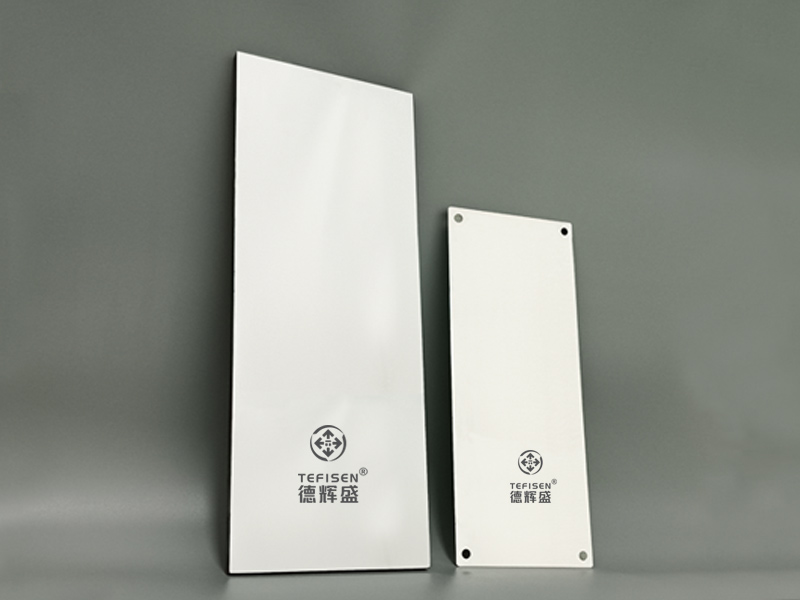
I. What Are the Differences Between the Etching and Laser Engraving Methods for Pad Print Cliché Production?
1.1 Comparison of the Etching and Laser Engraving Methods
| Comparison Dimension | Traditional Etching Method (Chemical Etching) | Laser Engraving Method (Laser Engraving) |
| Production Principle | Photochemical imaging + chemical corrosion | High-energy laser directly vaporizes metal |
| Process Flow | Complex, multi-step, involves chemicals | Simple, digital, one-step forming |
| Precision Performance | Extremely high, with steep edges (85-90°), suitable for ultra-fine lines | High, with slightly beveled edges (60-75°), suitable for most patterns |
| Halftone/Gradient Handling | Excellent performance, can create complex halftones | Excellent, with more precise and flexible digital control of halftones |
| Environmental Friendliness | Poor, uses and discharges chemical agents | Excellent, no chemical pollution, a green processing method |
| Plate-making Speed | Slow (2-4 hours, dependent on chemical reaction time) | Extremely fast (15-30 minutes, direct computer output) |
| Flexibility Level | Low, requires re-making film and exposure for pattern modification | Extremely high, patterns can be modified at any time, suitable for proofing |
| Equipment Investment | Relatively low | Very high (expensive high-end laser equipment) |
| Cost per Unit | Medium-low (for mass production) | Medium-high (due to high equipment depreciation costs) |
| Optimal Applicable Scenarios | Stable, large-volume, ultra-fine requirement long-term orders | Small-volume, multi-variety, rapid proofing, frequent revisions |
1.2 Analyzing Their Differences from a Principle Perspective
The etching method is essentially a "subtractive process." It forms a pattern protective layer on the surface of the cliché through photochemical imaging technology and then uses chemical corrosion to etch away the unprotected metal parts, creating recessed ink wells. This process simulates the essence of traditional printing plate-making and achieves precise control of depth by accurately controlling the temperature, concentration, and time of the chemical reaction.
The laser engraving method represents the latest trend in digital manufacturing and adopts a "non-contact, additive thinking" working mode. A high-energy-density laser beam, under computer control, performs micron-level scanning directly on the surface of the cliché, instantly melting and vaporizing the metal to form the required pattern. This process completely breaks free from the limitations of traditional chemical processes and realizes a seamless conversion from digital files to physical printing plates.
II. Detailed Description of the Pad Print Cliché Production Processes
2.1 Seven-step Process Flow of the Etching Method (Chemical Etching)
Step 1: Substrate Pre-treatment
High-quality chrome steel or alloy steel is selected as the base material, with a thickness usually ranging from 10-15mm and mainstream specifications such as 100mm x 100mm. Through precision grinding and polishing equipment, the surface roughness is controlled within Ra ≤ 0.1μm to ensure absolute flatness and no scratches. Subsequently, multiple cleaning processes such as degreasing, pickling, and ultrasonic cleaning are carried out to completely remove surface oil stains and oxides, obtaining a completely hydrophilic clean surface.
Step 2: Coating Photosensitive Resin
On the clean surface of the cliché, a layer of liquid photosensitive resin with a thickness of 5-10μm is uniformly coated using centrifugal spin coating technology. This photosensitive resin is sensitive to ultraviolet light of a specific wavelength. After coating, it needs to be dried in an 80°C constant-temperature environment for 10-15 minutes to form a dense and uniform photosensitive film.
Step 3: Exposure Imaging
A high-precision laser imagesetter is used to output the pattern onto a positive film. In a vacuum environment (vacuum degree ≥ 0.08MPa), the film is tightly attached to the coated cliché to avoid any gaps. A 365nm wavelength ultraviolet light source is used for exposure, with the exposure energy controlled within 100-200mJ/cm². The photosensitive resin in the exposed areas undergoes a photopolymerization reaction and hardens, while the shaded areas remain soluble.
Step 4: Developing Treatment
The exposed cliché is immersed in a 1% sodium carbonate solution at a temperature of 25 ± 2°C for 60-90 seconds for developing. The unexposed part of the photosensitive resin is completely dissolved, exposing the underlying metal substrate and forming a clear pattern outline. The control of the developing endpoint is crucial and directly affects the clarity of the pattern edges.
Step 5: Core Etching
The developed cliché is immersed in a ferric chloride etching solution with a concentration of 38-42°Bé, and the temperature is controlled at 45 ± 2°C. By accurately controlling the etching time (usually 15-30 minutes), grooves with a depth of 0.015-0.04mm are etched on the surface of the cliché. The precision control of this step directly determines the depth consistency of the ink wells, and the tolerance needs to be controlled within ±2μm.
Step 6: Stripping and Cleaning
A strong alkali solution is used to completely remove the hardened photosensitive resin protective layer. Subsequently, multiple cleaning processes are carried out to ensure that there are no chemical residues in the etched grooves. The cleaning process includes deionized water rinsing, ultrasonic cleaning, and other procedures.
Step 7: Hardening Treatment and Inspection
The etched cliché is subjected to chrome plating treatment, with a plating thickness of generally 0.01-0.02mm and a surface hardness reaching HV800-1000. Finally, a depth gauge is used to measure the etching depth, and a microscope is used to inspect the pattern edge quality to ensure compliance with quality standards.
| Advantages | Disadvantages |
| 1. The edges of the grooves are absolutely steep, the shape of the ink wells is regular, and the stability of ink transfer is excellent; | 1. Multiple links rely on manual operations, and the yield is affected by environmental factors; |
| 2. Can achieve ultra-fine line printing with a line width ≤ 0.05mm; | 2. The cost of chemical waste liquid treatment is high, and there is significant environmental pressure; |
| 3. The chrome plating layer is dense and hard, with strong wear resistance, and the service life can reach more than 1 million times. | 3. Pattern modification requires re-making film, with poor flexibility. |
2.2 Five-step Process Flow of the Laser Engraving Method (Laser Engraving)
Step 1: Substrate Preparation
Pre-chrome-plated steel plates are used as the base material, and the chrome layer has been polished before leaving the factory. Only simple cleaning is required before use, without the need for complex grinding and polishing procedures. The surface flatness requirements are lower than those of the etching method.
Step 2: Graphic Data Processing
The designed AI, CDR, or EPS format vector files are directly imported into the control system of the laser engraving machine. Laser power (50-200W), scanning speed, frequency, and the number of scanning passes are set according to the pattern characteristics. The file precision requirement is not less than 1200dpi.
Step 3: Laser Engraving Forming
A high-energy-density fiber laser beam scans the surface of the cliché precisely according to the preset path, with the focal point accuracy controlled within ±0.005mm. The metal at the laser irradiation point is instantly heated to the vaporization temperature (about 2500-3000°C) and directly evaporates to form pits. The etching depth and dot shape can be precisely adjusted by controlling the laser parameters.
Step 4: Surface Cleaning
Compressed air blowing combined with alcohol wiping is used to remove the trace amounts of metal slag and oxides generated by laser processing. If necessary, ultrasonic cleaning is carried out to ensure a completely clean surface.
Step 5: Quality Inspection and Packaging
A non-contact measuring instrument is used to detect the etching depth, with the tolerance controlled within ±0.005mm. The pattern clarity and edge quality are inspected under a microscope. After confirmation of qualification, anti-rust packaging is carried out.
| Advantages | Disadvantages |
| 1. It only takes 15-30 minutes from the file to the finished product, with an extremely fast response speed; | 1. The initial equipment investment cost is high, and professional laser equipment is expensive; |
| 2. Digital production, and pattern modification only requires adjusting the file, truly achieving "what you see is what you get"; | 2. The edges of the grooves have a natural slope, which has a slight impact on extremely fine lines; |
| 3. No chemical pollution, meeting the requirements of modern green manufacturing; | 3. High-temperature processing may generate trace amounts of slag, requiring additional cleaning procedures. |
| 4. High degree of automation and good batch consistency. |
III. How to Choose the Suitable Process?
3.1 Three Situations for Choosing the Etching Method:
3.1.1 Long-term stable large-volume production, typical applications include automobile dashboard icons, home appliance control panel labels, and medical device permanent markings. These applications have extremely high requirements for printing consistency, and the total number of printings usually exceeds 100,000 times. The long-term durability advantage of etched clichés can be fully utilized.
3.1.2 If your products involve ultra-fine printing such as precision circuit markings, micro-fine text (character height < 0.5mm), and anti-counterfeiting micro-patterns, the steep edge characteristics of the etching method are irreplaceable. Its sidewall verticality can reach 85-90°, ensuring the accuracy of ink transfer and edge clarity.
3.1.3 If you already have a mature chemical plate-making production line and have compliant wastewater treatment facilities, continuing to use the etching method can fully utilize existing equipment investments and reduce process conversion costs.
3.2 Five Situations for Choosing the Laser Engraving Method:
3.2.1 During the product development stage for proofing and the small-volume production period for market testing, the rapid response advantage of the laser engraving method is obvious. From design modification to obtaining a physical printing plate, it can be completed in as short as 1 hour, greatly accelerating the product development cycle.
3.2.2 For the production scenarios of promotional gifts, souvenirs, and personalized products with small volumes and multiple varieties, the digital flexibility advantage of the laser engraving method is fully reflected. Switching between different patterns only requires changing computer files without re-making plates.
3.2.3 Under the background of increasingly strict environmental regulations and higher corporate social responsibility requirements, the pollution-free characteristic of the laser engraving method becomes an important advantage. It is especially suitable for applications in clean rooms, food and pharmaceutical packaging, and other fields with high environmental requirements.
3.2.4 In industries with fierce market competition and rapid product updates, such as graphic advertising and fashion products, frequent pattern version updates are the norm. The laser engraving method supports on-the-fly modifications, avoiding the time lag of traditional plate-making.
3.2.5 Modern high-precision laser engraving machines can achieve fine dot control with a line count as high as 150LPI. In printing requiring rich hierarchical expressions such as portraits and landscapes, the precision of digital control even surpasses that of traditional processes.
IV. Detailed Explanation of the Pad Print Cliché Specification System
4.1 Standardization of Size Specifications
A clear specification system has been formed in the current market, with thickness specifications classified as follows:
• Thin clichés: With thicknesses of 0.3mm and 0.5mm, they are relatively flexible, have a service life of about 100,000 times, and are suitable for small and medium-volume production.
• Standard-thickness clichés: With a thickness of 10mm as the mainstream specification, they have a stable structure and a service life of more than 1 million times.
• Thickened clichés: With a thickness of 15mm, they have stronger rigidity and are suitable for large-format printing or special clamping systems.
Common size combinations (unit: mm):
Width Height Thickness
75 100 10
100 100 10
125 325 10
150 300 10
Key purchasing principles: Before placing an order, it is necessary to confirm the specific specifications of the clamping device of the pad printing machine. The most reliable method is to measure the size of the old cliché being used. When purchasing, the size must be clearly specified. If it is a cliché sheet, the hole positions must be measured accurately.
4.2 Material and Composite Structure
Modern pad print clichés adopt a multi-layer composite structure, mainly depending on your budget. The chrome plating layer is the core determinant of the cliché's service life. A high-quality hard chrome plating layer has the following advantages:
4.2.1 The surface hardness can reach HV800-1000, which is 3-4 times that of ordinary steel.
4.2.2 It can withstand millions of scrapings by the doctor blade without wear.
4.2.3 It effectively resists the erosion of various ink solvents.
4.3 Parameterized Selection of Etching Depth
The etching depth directly affects the ink carrying capacity and printing effect and needs to be selected according to the printing content and material of the substrate:
Standard depth range: 15-40μm (0.015-0.04mm), with a tolerance controlled within ±2μm.
Depth selection guide:
• 15-25μm shallow depth: Suitable for fine lines, small-font text, and high-line-count halftone printing. The ink layer is thin, and the edges are sharp.
• 25-35μm general depth: Suitable for most logos, icons, and color block printing, balancing ink volume and clarity.
• 35-40μm and above deep depth: Used for large-area solid printing and dark background coverage, providing a full color expression.
Depth influence factor matrix:
| Influencing Factors | Shallow Depth Applicable | Deep Depth Applicable |
| Ink Type | UV ink, fast-drying ink | Solvent-based ink, high-coverage ink |
| Substrate | Smooth surface, light-colored base material | Rough surface, dark-colored base material |
| Pad Hardness | Harder pad (50-60°) | Softer pad (30-40°) |
| Printing Speed | High-speed printing | Medium and low-speed printing |
4.4 Pattern Type and Technology Matching
Basic pattern types:
• Line version/solid version: Used for solid patterns such as text, logos, and color blocks, with relatively low technical thresholds.
• Halftone version: Simulates grayscale levels through dots of different sizes and densities, used for complex images such as photographs and gradients.
Technical advantage comparison:
• Etching method: Has traditional advantages in ultra-high line count (above 200LPI) halftone performance, suitable for high-requirement applications such as art reproductions.
• Laser engraving method: Digital dot control is more precise, and the gradient transition is more natural, suitable for modern digital image printing.
V. Purchasing Technical Specifications and Best Practices
5.1 Complete Purchasing Technical Checklist
To ensure the acquisition of pad print clichés that meet the requirements, please provide the following complete information to the supplier:
| Project Category | Specific Parameters | Requirement Description | Example/Remarks |
| Basic Physical Parameters | Diameter × Thickness Specifications | Must completely match the clamping device of the pad printing machine | 100mm × 10mm (most common in the market) |
| 95mm × 10mm | |||
| 150mm × 15mm (large format) | |||
| Special Processing Requirements | Specified according to equipment needs | □ Edge chamfering (R angle) | |
| □ Center positioning hole | |||
| □ Fixed screw hole position | |||
| □ Special slot | |||
| Production Process Specified | Production process | Choose one of the two, which determines the base material type | □ Etching method (chemical etching) |
| □ Laser engraving method (laser engraving) | |||
| Special Process Requirements | Specify clearly if special effects are required | □ Local depth increase | |
| □ Step-type multi-level depth | |||
| □ Gradient depth design | |||
| □ 3D stereoscopic effect | |||
| Pattern File Specifications | File Format | Must provide the source file format | AI / CDR / EPS (vector format preferred) |
| (JPG, PNG, and other bitmap formats are not accepted) | |||
| Halftone Image File | Special requirements for gradient patterns | Resolution ≥ 300dpi | |
| TIFF or PSD format | |||
| Indicate the halftone line count (e.g., 55LPI) | |||
| Color Annotation Specifications | Clearly distinguish printing and non-printing areas | □ Black = printing part (100%K) | |
| □ White/colorless = non-printing part | |||
| □ Spot color needs to provide the color plate number | |||
| Etching Depth Requirements | Target depth value | Specify the precise value and tolerance | 0.03mm ± 0.002mm |
| (or 30μm ± 2μm) | |||
| Application Scenario Description | Describe the purpose if the depth value cannot be determined | □ Fine text/lines (recommended 15-25μm) | |
| □ General logo/icon (recommended 25-35μm) | |||
| □ Large-area solid (recommended 35-40μm+) | |||
| Special Technical Requirements | Plate layout method | Arrangement method of multiple patterns | □ Single pattern |
| □ Positive and negative version (front and back layout) | |||
| □ Step-and-repeat (array layout) | |||
| □ Mixed layout (combination of different patterns) | |||
| Hardening Treatment Specifications | Surface coating technical requirements | Chrome plating thickness: 0.01-0.02mm | |
| Surface hardness: HV800-1000 | |||
| □ Standard chrome plating | |||
| □ Hardening treatment | |||
| □ Other: _________ | |||
| Substrate Information | Description of the printing target material | □ ABS plastic □ Metal | |
| □ Glass □ Silicone | |||
| □ Ceramic □ Other: _________ | |||
| Ink Type | Type of printing ink used | □ UV ink □ Solvent-based ink | |
| □ Epoxy ink □ Glass ink | |||
| □ High-temperature ink □ Other: _________ |
5.2 Practical Suggestions and Precautions
Before ordering new clichés, it is essential to conduct equipment compatibility verification. The best method is to provide the equipment model or measure the exact size of the existing cliché. The clamping device designs of different brands of pad printing machines may have subtle differences, and ignoring this may result in the inability to install the cliché. In addition, the following points need to be noted:
• Avoid the misconception of "the deeper, the better." Excessively deep etching not only increases costs but may also lead to ink diffusion and blurred pattern edges. Follow the basic principle of "using shallow depth for fine patterns and deep depth for large-area solids." For complex patterns, consider adopting a mixed-depth design.
• Regardless of the process chosen, the quality of the chrome plating on the final cliché is the key determinant of its service life. A high-quality hard chrome plating layer should meet the following requirements: uniform thickness (0.01-0.02mm),达标 (HV ≥ 800) hardness, and no pinhole defects. It is recommended to require the supplier to provide a plating layer detection report.
• When you need to have a cliché made, be sure to communicate clearly with the pad print cliché manufacturer about the cliché size, hole positions if it is a cliché sheet, the material of the substrate, the type of ink, and the precision requirements, so that they can understand all the information at once and avoid repeated communication.
VI. Industry Development Trends and Prospects
In large-volume production, the laser engraving method is first used for rapid proofing and verification, and then the etching method is used to make production plates. With the upgrading of the precision of laser engraving equipment, its applicability is also expanding. Of course, with the research and development of environmentally friendly etching solutions, the impact on the environment is also being reduced. The proportion of the laser engraving method has increased from less than 30% a decade ago to about 70% currently, making it the mainstream choice. However, the etching method still maintains more than 80% of the market share in ultra-fine printing fields such as automotive electronics, precision instruments, and high-end cosmetic packaging. For example, Europe and the United States prefer the laser engraving method, while the Asian market is more inclined towards the etching method.
As the core of precision printing, the choice of the production process for pad print clichés is a comprehensive technological decision. Both the etching method and the laser engraving method have their own strengths and are suitable for different environments. In actual production, different methods should be selected according to your own needs. If you have any inquiries about the production process of pad print clichés, please call the TEFISEN pad print cliché hotline: 0752-3296999.