


News
The Guangdong Pad Printing Pads: Small Part, Global Impact


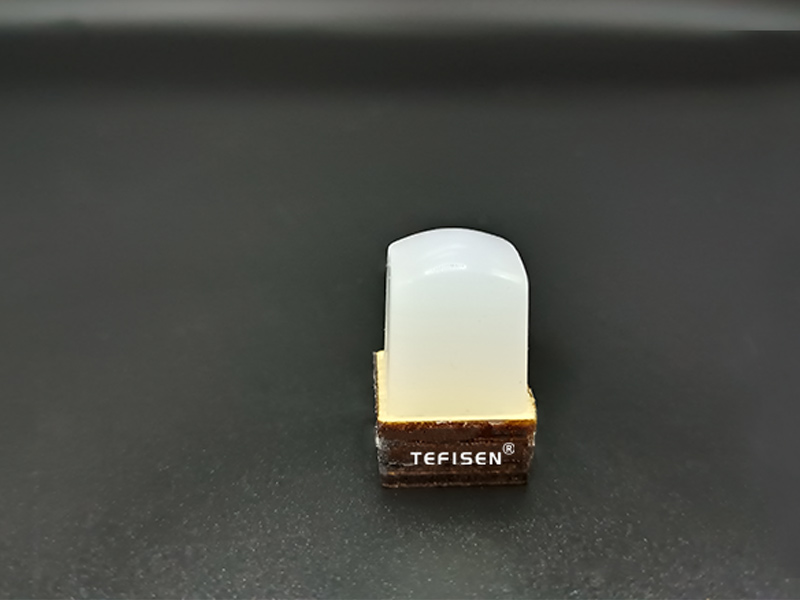
Inside the production floor of the TEFISEN factory in Huizhou, Guangdong, a high-precision T700 CNC machine meticulously carves an optical-grade crystal mold. This seemingly mundane process represents a critical technological node within the entire "Guangdong pad printing pads" industry chain. Each meticulously crafted mold will give birth to tens of thousands of indispensable precision tools for industrial printing—pad printing pads. Shaped like mushrooms and small as buttons, these heads play an irreplaceable role in the capillaries of global manufacturing. From the sleek brand logos on smartphone casings to the clear symbols on automotive buttons, from the precise printing of scale markings on medical devices to the elegant patterns on cosmetic packaging—behind these visible details lies the precise transfer enabled by this tiny silicone component.
I. Analysis of Market Potential for Guangdong Pad Printing Pads
Statistics show that Guangdong's pad printing pads output accounts for 75%-80% of the global supply, with annual production exceeding 2 billion units, directly serving over 50 manufacturing subsectors. In the three cities of Dongguan, Shenzhen, and Huizhou alone, more than 500 related enterprises are clustered, including approximately 15 leading companies with annual output values exceeding 100 million RMB, forming a complete industrial ecosystem ranging from specialized silicone material R&D to end-use application validation.
The industry exhibits a clear "80/20" differentiation: about 80% of enterprises focus on the low-end market, with product unit prices ranging from 3 to 15 RMB and gross margins generally below 20%. The remaining 20% are technology-driven enterprises, such as TEFISEN, which concentrate on the high-end customization market. Their product unit prices can reach 80–500 RMB, with gross margins maintained at 35%–45%, contributing over 60% of the industry's total profits. The head of TEFISEN's pad printing pads department revealed, "Our customized business has achieved an average annual growth rate of 25%."
• Explosive Growth in New Energy Vehicles: Each new energy vehicle requires an average of 35–50 pad-printed markings, a 40% increase compared to traditional vehicles. By 2025, this sector alone is expected to bring an additional market size of 1.2 billion RMB for pad printing pads, with a compound annual growth rate (CAGR) of 30%.
• Trend Toward Miniaturization in Consumer Electronics: As electronic products become thinner and lighter, the demand for micro-printing technology continues to rise. Demand for micro-sized pads (diameter < 3 mm) used for printing internal components of mobile phones is growing at an annual rate of 45%, with unit prices 3–5 times higher than standard heads.
• High-End Demand in Medical Devices: The global medical device market is projected to reach 600 billion USD by 2025, with devices requiring high-precision printing accounting for 30%. The gross margin for such specialized pads can reach 60%, twice that of standard products.
II. The "Invisible Craftsmen" of Global Manufacturing: Transformation from Craft to Industrial Product
Over 70% of the world's pad printing pads are produced in Guangdong, primarily concentrated in Dongguan, Shenzhen, and Huizhou, forming a highly clustered industrial hub. This region has established a complete industrial chain encompassing specialized silicone material R&D, precision mold design and manufacturing, automated head production, and integrated pad printing process solutions. This ecosystem is not only vast in scale but also supports the refined demands of global manufacturing with remarkable collaborative efficiency and innovative capabilities.
The industry displays a distinct hierarchical structure: the low-end market is saturated with numerous small workshops that meet basic, low-quality demands with extremely low prices and generic products. In contrast, the mid-to-high-end market is dominated by professional manufacturers like TEFISEN, which possess comprehensive capabilities spanning product ID design, mold development, production molding, and online process validation. The head of TEFISEN's pad printing pads department has a profound understanding of this: "We can customize Pads products that perfectly meet customer requirements based on provided drawings, samples, or specific application scenarios. Our core philosophy has never been about pursuing the lowest price but about providing the most suitable solution." This value-oriented approach has allowed them to maintain a unique competitive advantage in a fiercely competitive market.
III. Technological Breakthrough: The Quality Revolution from "Manufacturing" to "Intelligent Manufacturing"
1. Mold Development and Control
Molds are the cornerstone of pad printing pads quality. TEFISEN insists on using imported crystal molds. Compared to the disposable plastic molds commonly used in the industry, crystal molds ensure highly consistent dimensional accuracy and surface quality for every produced head. This seemingly high investment is, in fact, a necessary cost to guarantee long-term stable quality.
2. Meticulous Refinement of Every Process
In a dedicated, isolated space, laser cutting machines methodically slice each head base. The pad printing pads production line strictly controls the mixing parameters and injection molding of the silicone. The molding and curing workshop is even equipped with specially designed dust-proof flooring to prevent surface contamination. Every production step is strictly monitored, and each pads is assigned a unique traceable code.
"The silicone curing process is like precision cooking; even slight deviations in temperature and time parameters can directly affect the final performance," explained a production engineer. "We have established specialized curing programs for different silicone formulations. All parameters are digitized and traceable, ensuring absolute stability in the performance of every batch."
IV. Application Expansion: Value Enhancement from Standardization to Customization
As manufacturing moves toward refinement and personalization, the application scenarios for pad printing pads continue to expand. Traditionally used mainly for printing on plastic and metal surfaces, they now extend to materials such as glass, ceramics, and silicone. Particularly in high-end fields like miniaturized electronics, high-precision medical devices, and durability testing for automotive parts, the performance requirements for pads are increasingly stringent. The "Guangdong pad printing pads" industry faces new opportunities and challenges. On one hand, the wave of Industry 4.0 is driving the intelligent upgrading of production processes. Future heads may integrate micro-sensors to enable real-time monitoring and adaptive adjustment during printing. On the other hand, rising global environmental requirements are pushing companies to develop more eco-friendly silicone materials and cleaner production processes.
Simultaneously, the growing demand for small-batch, multi-variety customization places higher demands on enterprises' rapid response capabilities and flexible manufacturing proficiency. TEFISEN is also implementing digital twin technology to manage the entire process from design to production, significantly shortening new product development cycles and enhancing customization service capabilities.
From a small silicone component to a critical tool supporting global precision printing, the developmental journey of the "Guangdong pad printing pads" is a vivid microcosm of the transformation and upgrading of Chinese manufacturing. It demonstrates that true industrial competitiveness stems not only from economies of scale but also from the relentless pursuit of technical details, a profound understanding of customer value, and keen insight into industry trends.
In TEFISEN's sample exhibition hall, thousands of pads with different shapes, hardness levels, and sizes are neatly arranged. Each represents a technological solution to a specific printing challenge. These seemingly insignificant products are imprinting the finesse and professionalism of "Intelligent Manufacturing in China" onto the vast stage of global manufacturing with their exceptional performance and reliable quality. This is the true code behind the "Guangdong pad printing pads" evolution from a tiny component to a global industry benchmark—pursuing perfection within a square inch and creating value in the minutest details.