


News
Rainy Season Pad Printing Plate Maintenance: 3 Tips to Prevent Rust


Walls sweating, floors slippery, windows fogging up – every year in March and April, the rainy season most familiar to people in Guangdong arrives right on schedule. Air humidity pushes close to 90%, and clothes left to dry for three days can still be wrung out. This kind of weather is practically a "major ordeal" for pad printing plates in printing workshops.
Just a few days ago, a friend from Foshan who makes electronic components sent me photos: three pad printing plates, used for less than six months, had rusted on the surface. He said regretfully, "We were rushing to fulfill orders this week. After finishing work, I just tossed the plates in a corner. I never expected the rainy season to ruin them all." Actually, I hear stories like this several times every year. Issues like rusted plates and decreased printing precision might seem minor, but when they happen, the least consequence is delaying production; the worst is scrapping the plates entirely.
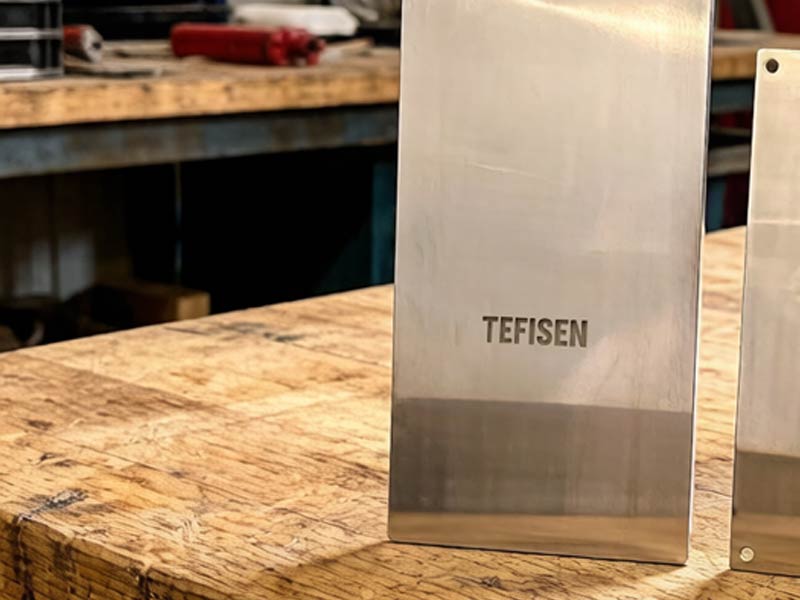
Today, drawing on TEFISEN's 15 years of industry experience, I want to have a detailed discussion with you all about exactly how to maintain pad printing plates during the rainy season. It's all practical knowledge; I suggest bookmarking it.
I. Why is the Rainy Season the "Number One Natural Enemy" of Pad Printing Plates?
Many people don't understand: Isn't a steel plate just a piece of metal? Why is it so afraid of moisture? It really is that serious.
The surface of a pad printing plate undergoes precision etching. The depth of the grooves in the pattern area is usually only a few tens of microns – finer than a human hair. During the rainy season, moisture in the air meets the cooler surface of the steel plate and rapidly condenses into tiny water droplets invisible to the naked eye. Once these tiny droplets enter the etched grooves, they cause two fatal problems:
First, oxidation and rust. Moisture contacts the plate's surface, triggering rust. Rust damage destroys the edges of the etched pattern, causing the printed products to have blurred edges and a jagged appearance. In severe cases, the entire plate is scrapped directly.
Second, ink contamination. Moisture in the grooves mixes with the ink, altering its viscosity and fluidity, leading to uneven ink transfer, inconsistent print depth, and incomplete patterns.
What's worse, these problems often creep up on you like the "frog in boiling water" – it looks okay today, you don't pay much attention tomorrow, and by the time you discover it, the plate is already ruined. Therefore, pad printing plate maintenance must be done before the problem occurs.
II. The "Golden Three Minutes" After Work
My own habit is to absolutely must complete three tasks before finishing work every day, without fail. These three things are the most fundamental and critical step in pad printing plate maintenance:
First, thorough cleaning. After each day's work, be sure to thoroughly wipe the plate surface with a dedicated plate cleaner to remove residual ink and impurities. Note: don't use regular industrial alcohol – alcohol evaporates too quickly and doesn't dissolve certain inks well, easily leaving residue. You must use a professional cleaner to remove the ink from the etched grooves completely.
Second, thorough drying. After cleaning, absorb any moisture with a dry, lint-free cloth to ensure the plate surface is completely dry. Many people overlook this step, just wiping it a couple of times casually. But during the rainy season, this carelessness can be fatal – residual cleaner left on the plate contains moisture; if not wiped away promptly, moisture remains. The experienced technicians at TEFISEN do this: After wiping, they use dry compressed air to blow through the etched grooves, ensuring no moisture remains.
Third, applying rust preventive oil. After drying, apply a thin layer of rust preventive oil (it's recommended to use a low-volatility, specialized rust preventive oil) to form a protective film that isolates moisture. You don't need to apply a lot, just enough to create a protective film. This oil film acts as a "raincoat" for the plate, separating it from the moisture in the air. If the plate won't be used for an extended period, after applying the oil, it's necessary to completely wrap and seal the plate in a PE plastic bag.
There are two key points for sealing: first, it must be completely wrapped with no gaps; second, it must be stored flat, not vertically or at an angle, to prevent plate deformation or knocks.
These three tasks take only three to five minutes total. But these three minutes are the most worthwhile investment in pad printing plate maintenance.
III. Storage Stage: Location Determines "Life or Death"
If plates need to be stored idle, the storage location becomes extremely important.
Many people are used to casually placing plates on the floor or leaning them against a wall corner. During the rainy season, these two places are "disaster zones" – moisture rises from the floor, walls seep water. Placing a plate there is like delivering it to be rusted.
The correct storage method is a non-negligible part of pad printing plate maintenance:
First, choose the right location. Plates must be placed in a dry, well-ventilated environment, away from doors, windows, water sources, or humidifiers. If the humidity in the workshop is extremely high, consider setting aside a dedicated storage area, placing a dehumidifier, and controlling the ambient humidity below 50%.
Second, use the right containers. You can place dehumidifying bags or desiccant in the storage area. Also, plates should be stored horizontally on anti-static or protective trays, avoiding direct contact with the floor or walls. If you have many plates, purchasing several sealed, moisture-proof cabinets yields better results.
Third, regular inspection. During the rainy season, it's recommended to check the plates' condition at least once a week. If minor rust spots are found on the surface, never scrape them with hard objects. Immediately and gently polish with fine sandpaper, then clean again and reapply rust preventive oil. If mold spots or moisture condensation are found inside the etched grooves, carefully clean them using a dedicated soft brush dipped in cleaner, ensuring the grooves are clear and unblocked. This habit is an easily overlooked but extremely important part of pad printing plate maintenance.
IV. The "Last Line of Defense" Before Use
Many operators have a habit: take a plate out of storage, give it a quick wipe, and put it directly on the machine for use.
This habit is very dangerous during the rainy season. The rust preventive oil applied during storage, if not completely removed, will affect the ink transfer performance. If the rust preventive oil mixes into the ink, it can cause poor ink adhesion and blurry patterns.
The correct start-up procedure is the final line of defense in pad printing plate maintenance:
Before using a plate again, first wipe off the surface rust preventive oil with a lint-free cloth dipped in cleaner, and use dry air to blow any residual impurities out of the etched grooves. Confirm the plate surface is smooth and the pattern is clear before putting it into production. This prevents rust preventive oil or residual impurities from affecting ink transfer.
Spending an extra two minutes on this step guarantees that every product you print will be qualified.
V. Some Suggestions from TEFISEN
To be honest, after so many years in the printing consumables business, we've noticed a pattern: when equipment fails, nine times out of ten, it's because maintenance wasn't kept up.
A printing plate might seem insignificant, but it's the foundation of print quality. With good plate maintenance, the printed products have sharp edges and accurate color registration. If the plate has problems, even the best ink and most expensive machine are useless.
Although the impact of humid weather on pad printing plates is subtle, it cannot be ignored. Doing a good job with pad printing plate maintenance effectively extends the plate's service life and ensures stable printing results. Especially in Guangdong, the rainy season is unavoidable. What we can do is prioritize maintenance, spending a few extra minutes each day in exchange for smooth production throughout the year.
If you encounter any questions during maintenance, feel free to contact the TEFISEN technical team anytime. We will provide you with professional support.
If you've got any special tricks up your sleeve for pad printing plate maintenance, or if you've run into any real head-scratchers, don't hesitate to drop a comment below. As fellow technicians, we can only move forward together by sharing more and talking more.