


News
Intelligent Pad Printing Technology: An AI-Driven Era in 2035


AI is poised to revolutionize the global pad printing industry by 2035. Moving beyond traditional efficiency and precision limitations, "intelligent pad printing technology" will leverage multimodal sensing and deep learning to achieve transformative breakthroughs: setup time will be cut by 98%, first-pass yield will reach 99.3%, and a "printing as a service" model will emerge. Beyond dramatic gains in productivity and quality control, this technology will significantly reduce material waste and carbon emissions while creating new roles for human-AI collaboration. Ultimately, intelligent pad printing will act as a key catalyst, propelling the entire manufacturing sector toward a more precise, flexible, and sustainable future.
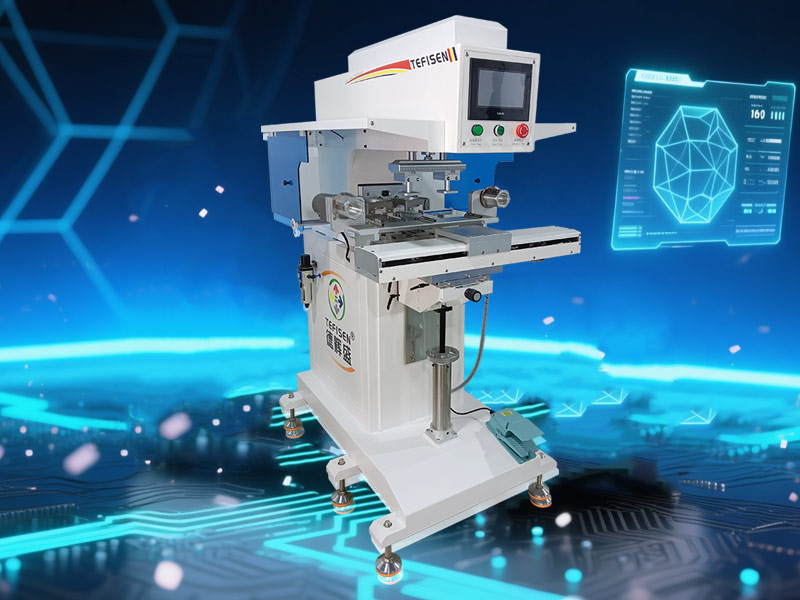
1. Market Data Reveals the Dawn of Transformation
In 2023, the global pad printing machine market reached a size of $4.28 billion, with an annual growth rate of only 3.2%. However, according to the latest forecast from the International Industrial Printing Association, by 2035, this market will experience explosive growth, reaching $21.4 billion. Solutions centered on intelligent pad printing technology are expected to capture 78% of the market share. This transformation stems from the deep integration of AI technology with traditional industries.
The pain points facing current manufacturing are astonishing in terms of data: traditional processes average 4.5 hours for setup, and small-batch production suffers a 37% loss in conversion efficiency. These data points clearly indicate that intelligent pad printing technology must overcome these industrial challenges to achieve a genuine breakthrough.
2. The Neural Pad Printing System: Algorithmic Reconstruction of the Microscopic World
A typical representative of intelligent pad printing technology in 2035 is the "NeuroPrint Core" multimodal AI system. This system processes 2.7 terabytes of real-time data per second, achieving true intelligent control. This new generation of intelligent pad printing technology utilizes a visual array composed of 16 nanoscale high-speed cameras, capturing the microstructure of printing surfaces at a rate of 120,000 frames per second.
The core breakthrough of intelligent pad printing technology lies in its deep reinforcement learning models. Taking Precitec's AuraPrint system launched in 2029 as an example, this intelligent pad printing technology optimized over 1.4 million process parameter combinations in actual production within just six months, increasing the first-pass yield for complex irregularly shaped parts from 71.6% to 99.3%.
3. A Panoramic View of Data-Driven Industry Restructuring
3.1 Revolutionary Breakthrough in Production Efficiency
According to McKinsey's 2020 Manufacturing Report, AI-based intelligent pad printing technology has achieved significant improvements across multiple key metrics. Setup time has been reduced by 98%. Traditional debugging that required several hours can now be completed in an average of 4.2 minutes through digital twin simulation.
Data from Bosch, a leading global automotive electronics supplier, shows that its intelligent pad printing technology production line deployed in 2032, when printing logos on electronic control unit (ECU) housings, increased overall equipment effectiveness (OEE) from the traditional 65.3% to 94.7%, saving approximately €8.7 million in costs annually.
3.2 A Paradigm Shift in Quality Control
The quality assurance system in 2035 operates on a "predict-and-prevent" mode. The Quality Prophet system for intelligent pad printing technology, developed by the American company NeuroInk, can predict potential defects with 92.3% accuracy before printing begins. This system reduces the defect rate from an industry average of 2.1% to 0.03%, equivalent to only 300 defective items per million products.
Even more noteworthy is that intelligent pad printing technology systems have discovered hidden correlations previously unnoticed by human engineers: data shows that when ambient temperature fluctuates by more than 0.8°C per hour, the adhesion strength of specific blue inks decreases by 17%. This discovery showcases the unique value of intelligent systems.
4. Restructuring the Economic Model: From Product Sales to Value Services
The business models of traditional pad printing machine manufacturers are being completely rewritten. Seiko Epson Corporation's 2032 financial report shows a fundamental change in the revenue structure of its intelligent pad printing technology solutions division: hardware sales decreased from 78% in 2019 to 32%, while subscription service revenue increased from 12% to 44%.
This shift stems from the rise of "Printing-as-a-Service" platforms. In 2034, PrintCloud, the world's largest printing service platform, connected over 87,000 devices employing intelligent pad printing technology, processing more than 450,000 printing tasks daily, with an average task delivery time of only 2.7 hours.
5. Quantifiable Improvements in Environmental Impact
Sustainable development has achieved precise quantification under the drive of intelligent pad printing technology. Data from the International Environmental Technology Association shows: AI-optimized ink usage systems have reduced chemical material consumption by 41.7%, decreasing global printing chemical waste by approximately 38,000 tons annually. Intelligent temperature management and standby optimization systems have lowered energy consumption by 62%, equivalent to reducing carbon dioxide emissions by 2.87 million tons per year.
Taking the global electronics manufacturing industry as an example, by 2034, the application of intelligent pad printing technology helped the industry reduce electronic waste generation by about 12%, primarily due to improved printing quality extending product lifespan.
6. Structural Transformation of the Labor Market
The pad printing workshop in 2035 presents an entirely new landscape. According to the World Economic Forum's 2023 Manufacturing Human Resources Report: traditional operator positions decreased by 72%, but new roles were created, including "AI Trainers," "Digital Process Engineers," and others. Skill requirements underwent a fundamental transformation, with demand for data analysis skills growing by 340%.
Data from the Siemens Industrial Training Center indicates that a qualified intelligent pad printing technology system engineer needs to master an average of 17.3 digital tools, but their work efficiency is 8-12 times that of a traditional engineer, reflecting the profound impact of technological upgrades on human resources.
7. Future Challenges and Ethical Boundaries
As intelligent pad printing technology becomes deeply integrated into global manufacturing, new challenges are emerging: data security and sovereignty issues are becoming increasingly prominent. Each intelligent device generates approximately 4 terabytes of industrial data daily, raising international disputes over the ownership and usage rights of this process-confidential information. Algorithm monopoly risks are also gradually appearing, with the top three AI printing algorithm platforms controlling 76% of the global market share.
The International Manufacturing Ethics Committee is drafting the "Global Guidelines for Artificial Intelligence Industrial Applications." Specific provisions concerning intelligent pad printing technology are expected to be released by the end of 2035, establishing ethical boundaries for the development of this technology.
Conclusion: Invisible Intelligence, Visible Transformation
Intelligent pad printing technology in 2035, like an invisible artist's hand, precisely reshapes the material world on a microscopic scale. From vital sign monitoring circuits on medical devices to flexible sensors in wearable devices, this technology is redefining the boundaries of "manufacturing."
Behind these changes lies the combination of data intelligence and human wisdom. As Elena Chen, Chairperson of the Global Printing Association, stated: "The best technology does not replace humans but expands the boundaries of our capabilities. Intelligent pad printing technology allows us to create products unimaginable a decade ago and solve manufacturing challenges once considered insurmountable."
In this era of intelligent printing, intelligent pad printing technology, as a carrier of data and algorithms, is helping humanity write a more precise, sustainable, and possibility-filled future in the macroscopic world. The development trajectory of this technology not only reflects the logic of technological progress but also heralds the arrival of a new era of human-machine collaboration.